Talk About a Revolution
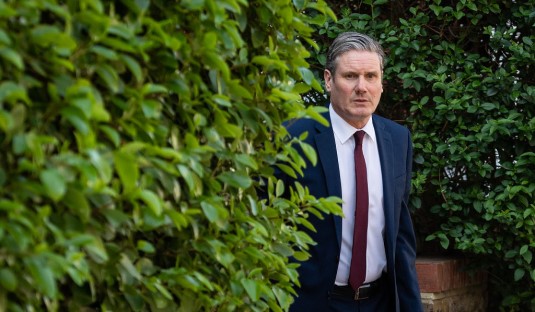
In the Novara video linked to above, Aaron Bastani suggests that Starmer's effort to ward off the revolutionary spectre is because, in the rarefied world of the Parliamentary Labour Party and its Westminster environs, the action necessary to fix the triple whammy of food price inflation, energy bills, and Rishi Sunak's National Insurance increase looks revolutionary. Indeed, with the cost of living likely to go up between £2k-£3k on average, the sorts of wage increases necessary to mitigate it are only usually found in the 'Where We Stand' columns of your Trot paper of choice.
I think there's a more straightforward political reason than this. First, Starmer is on the horns of a dilemma. On the one hand, like the Tories he doesn't want to commit Labour to offering much as a means of insulating his leadership from public pressures. Neither does he want to offer policies that have the merest connotation of Corbynism. But at the same time, to win an election Labour has to intersect with public concerns and seek to shape them. Starmer, as we have seen plenty of times these last couple of years, understands that he has to do the former but is lost at sea when it comes to the latter. Winning new voters while promising nothing during the biggest squeeze on incomes for a generation - tough gig.
Starmer's reach for the R word is a product of these tensions. Armed with latest pearls from Deborah Mattinson's focus groups, what the Labour leader is attempting to do is associate the party with the popular demand for something to be done about bills and prices, but at the same time attempting to placate the reactionary former Labour voter his circle think they can win back with Delphic language and constant apologies for existing. Starmer was seeking to assure this artefact of the Labour right's imagination that not having to choose between heating and eating isn't revolutionary politics. Seemingly unaware that those Labour has to win over are the "pensioners from Stevenage", who are among the vast bulk of people hardest hit by the Tories' refusal to do anything.
The emerging school of thought in Westminster and among the lobby hacks is that Starmer is very unlucky. Not so. Covid and the war in Ukraine have had their political opportunities where Labour could make a splash. And the cost of living crisis is another. The Tories have not only served Starmer up a juicy issue on a plate, they've taken the trouble of garnishing it with their customary indifference and inaction. Right now, there is a crisis threatening to plunge millions into further hardship. Among these are the home-owning pensioners Labour have steadily lost this century, and others ordinarily in the Tory camp. To use the jargon, it has cut through and has cross-party appeal. Any competent leader would seize the moment by the scruff of its neck to win over new voters and turn the heat up on their opponents. Instead, we have Keir Starmer who thinks the appropriate response is to plead with an imagined comfortable voter that all the little people want is a few crumbs from the table. If you want to understand why Labour is retreating in the polls and, again, Boris Johnson is seen as a more capable Prime Minister, look no further than this miserable spectacle.
Image Credit